
Water resources play a vital role in ensuring the survival and progress of human beings. But unfortunately, we are facing a global water crisis due to the scarcity of water resources and the escalating problem of water pollution. To tackle this pressing issue, Yili is committed to promoting efficient utilization and management of water resources. By harnessing new technologies, Yili aims to reduce water consumption and enhance water resource management. Our goal is to contribute to the sustainable development of water resources, ensuring a better future for generations to come. By proposing the "Low Water Footprint Initiative (LWFi) for Dairy Industry", Yili has become China's first company to join the UN Water Action Agenda at the UN Water Conference held in March 2023.
Yili has established a Strategy and Sustainable Development Committee at the board level, which is composed of eight directors (including two independent directors), under the charge of Mr. Pan Gang, the Chairman and President of Yili. Apart from business development strategy, the Committee also focuses on researching and recommending sustainability strategic plans for Yili's long-term development. The Committee also oversees its sustainability strategy implementation across the company (including water resource management). The Sustainable Development Office is under Strategy and Sustainable Development Committee, which is responsible for the sustainability performance supervision and report to the Strategy and Sustainable Development Committee on a regular basis. The Safety Production Management Department of Yili is responsible for day-to-day management of water resources. The quarterly progress reports are submitted to the Sustainable Development Management Office for review and monitoring purposes.

In 2024, Yili Group was rated as "B-Management Level" by the CDP Water Security, representing the international sustainability rating agency's recognition of Yili Group's effective water management in terms of governance structure, risk management, and actionable strategies.
Water Stress Assessment of Production Operations
Based on the World Resources Institute (WRI) Aqueduct Water Risk Atlas, we conducted a water-stress assessment across all production facilities we operate. The assessment revealed that 35 are located in areas of high or extremely high baseline water stress. In response to these findings, Yili launched a company-wide water-saving programme. We have set quantitative targets and drawn up site-specific improvement plans for facilities in high or extremely high water-stress regions, with the dual aim of raising water-use efficiency and mitigating associated risks. In 2024, 433 water-reduction projects were implemented at these facilities—representing 64.82% of Yili's water-saving initiatives for the year and delivering total savings of approximately 2.96 million cubic metres (m3). Moving forward, we will intensify water-efficiency efforts in high water-stress regions. This includes collaborating with research institutions, deploying advanced conservation technologies, scaling up water-efficient production processes, and expanding water-recycling projects. Our annual withdrawal-reduction plans will continue to cover 100% of our production facilities in these regions, and we will review—and, where necessary, re-optimize—the placement of water-intensive product lines to align with local water-stress levels. Through these actions, Yili aims to drive the sustainable and efficient use of water resources across all high-risk basins.
Water Risk Assessment of Supply Chian
To reduce the potential impact on water resources, Yili has extended water risk management to its raw-material supply chain. In 2023, Yili launched the Low Water Footprint Initiative (LFWi) Alliance, focusing on water-saving projects to strengthen suppliers' water-risk management capabilities. As of the end of October 2025, LFWi Alliance member suppliers have implemented 13 water-saving projects, accumulating total water savings of 1.88 million metric tons (cubic meters). In 2025, to address water footprint reduction in high water-risk raw material suppliers, we utilized the Aqueduct Water Risk Atlas developed by the World Resources Institute (WRI) and the CDP Water Watch tool to conduct comprehensive water risk and water dependency assessments across 100% of our production-based raw material suppliers. The assessment revealed that suppliers of fruits and vegetables, palm oil, cocoa beans and starch demonstrated relatively high dependency on water resources. The number of those suppliers located in areas with high or extremely high water risk accounts for 10.7% of the total supplier base. Based on questionnaire surveys and on-site verification, we confirmed that these suppliers with high water dependency operating in high water risk regions maintained stable water supply. No supply disruptions occurred as a result of water price fluctuations or physical scarcity. The material water risks associated with these suppliers are assessed as manageable in the short to medium term.
In 2026, Yili will implement a comprehensive strategy to advance water stewardship with high-risk suppliers—those characterized by high water dependency in locations facing significant water stress. Our key initiatives will include establishing collective water reduction targets, facilitating best practice sharing, and integrating more stringent water management criteria into our supplier selection process. In parallel with our efforts targeting raw-material suppliers, Yili has been proactively engaging our core raw milk suppliers in water risk assessments. Using a systematic approach, these suppliers apply the AWARE (Available WAter REmaining) methodology—developed by the WULCA working group under the UNEP-SETAC Life Cycle Initiative—to assess water scarcity in life cycle assessments at partner dairy farms on a recurring cycle of every two to five years. The assessment framework classifies results into a four-tier risk scale (Level 1–4, from highest to lowest), enabling full coverage of dairy farms linked to our core raw milk suppliers. Results show that approximately 13% of these farms are located in high-water-risk areas, primarily in Beijing, Tianjin, Hebei, and Shanxi provinces. Follow-up validations based on operational data confirm that water supply in these regions remains stable and posing no material threat to our operations in the short to medium term.
To enhance water risk resilience, Yili leverages assessment insights to support core raw milk suppliers in developing tailored water management plans. Key measures include: ?Site Selection: Ecologically sensitive and water-stressed areas are strictly excluded from consideration. Priority is given to locations with abundant water resources or where engineering solutions can sustainably maintain water balance without material adverse impact; ?Equipment Selection: Water-saving and treatment technologies are carefully selected to align with local water availability and quality conditions, maximizing resource efficiency across dairy farm operations; ?Process Optimization: Advanced solutions such as AI-assisted precision sprayers and closed-loop cleaning-in-place (CIP) systems are deployed to eliminate water waste and minimize consumption throughout operational processes; ?Knowledge Sharing: Best practices in water management are systematically collected and shared among raw milk suppliers. Regular exchanges are facilitated to promote experience-based learning and support farm-level water conservation.
Yili has implemented water management programs across all of its core operations. The Strategy and Sustainable Development Committee of the Board has set water reduction targets in order to monitor the progress and effectiveness of the water reduction programme.
| Target Categories | Target Value | Progress made in 2024 | Target Progress |
|---|---|---|---|
| Water conservation target at operation | By 2025, the water consumption of production will be reduced by 3% compared with 2021. | Reduced by 10.66% | Achieved |
| By 2025, the water consumption per ton of product will be reduced by 3% compared with 2021. | Reduced by 7.96% | Achieved | |
| By 2025, the recycling rate of reclaimed water will be increased by 5% compared with 2021. | Increased by 8.18% | Achieved | |
| Water conservation target at supply chains | Taking 2021 as the baseline year, within the next five years (up to 2025), the daily water consumption standard per single cow will be maintained within 110 kg. | The water consumption was 1,100 tons per million revenue. The water consumption per ton of milk in 2024 decreased by 12.47% compared with 2023 | In progress |
| Water conservation target at operation | By 2030, the water consumption of production will be reduced by 3% compared with 2025. | / | / |
| By 2030, the water consumption per ton of product will be reduced by 3% compared with 2025. | / | / |
In 2022, Yili launched a water footprint project for both products and organization level. Based on the "ISO 14046 Environmental Management - Water Footprint - Principles, Requirements and Guidelines", the project involved certifying the water scarcity footprint by conducting a Life Cycle Assessment (LCA) for both the organization and its products. The project comprehensively assessed the water footprint throughout the entire product value chain's lifecycle and its impact on regional water resources, identifying opportunities for potential environmental improvement. By December 2024, a total of three products and five factories had conducted water footprint Assessment and obtained third-party certification.
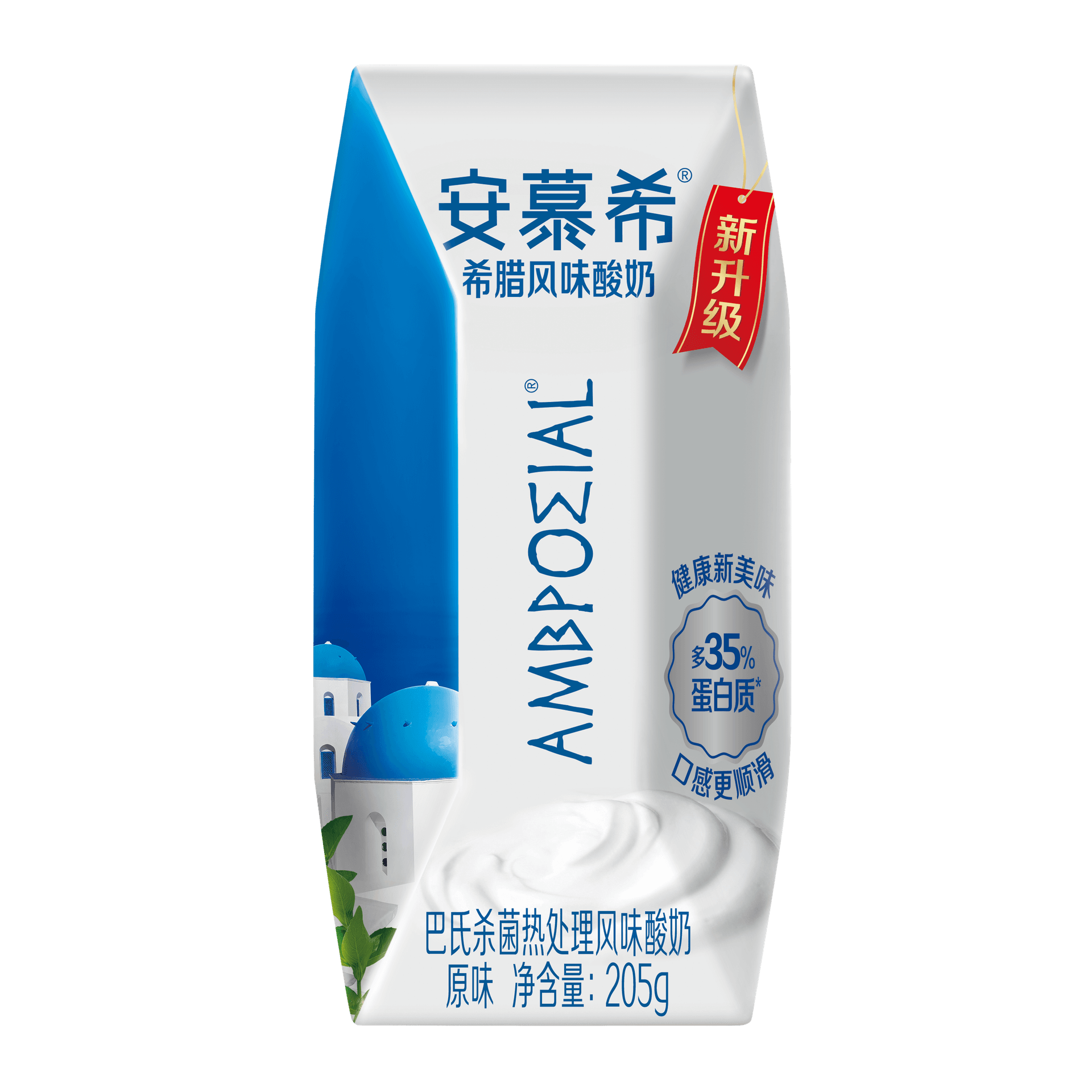
Ambrosial Flavored Yogurt Original Flavor 2.55 m3H?O_eq/L
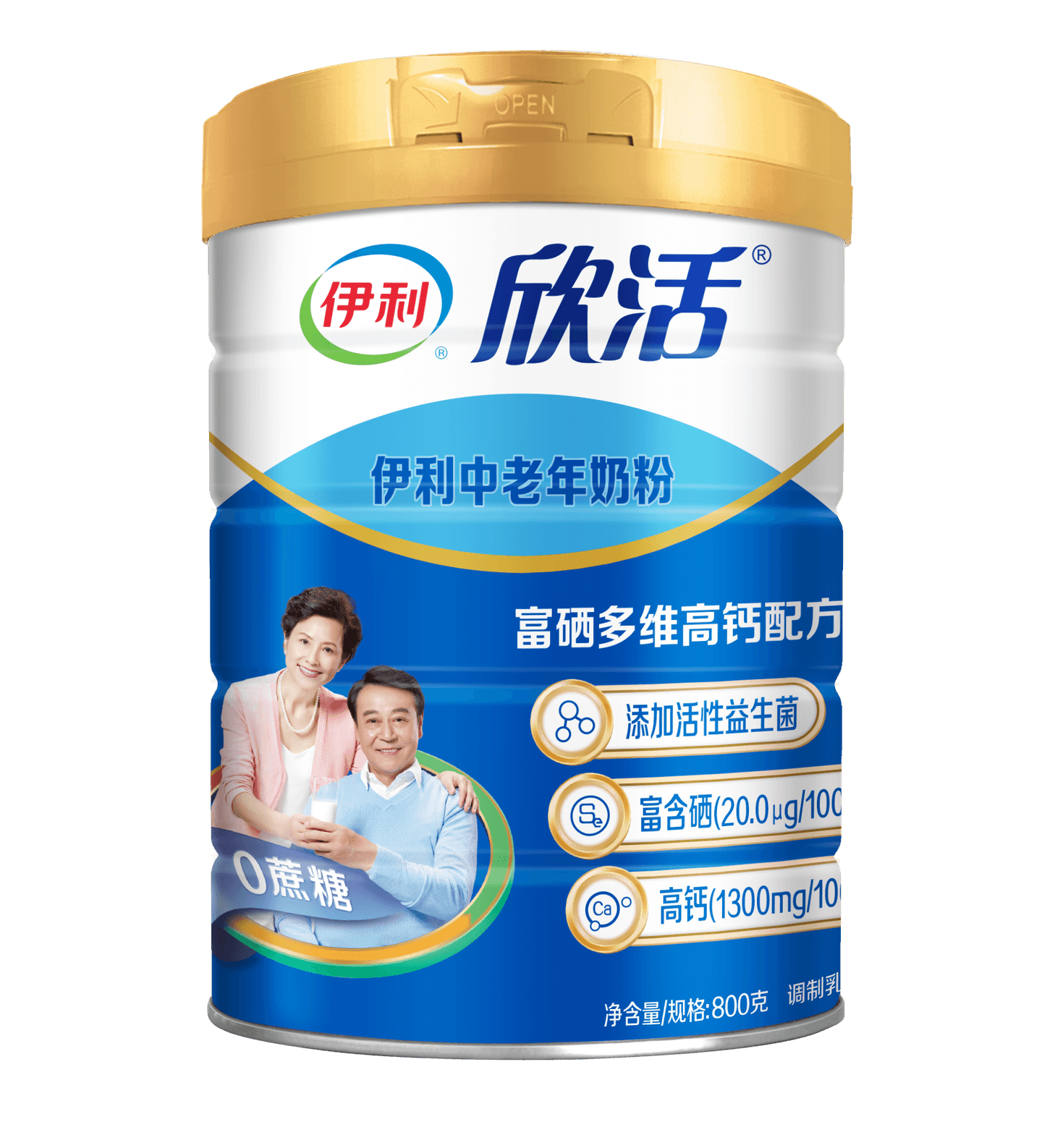
Xinhuo Middle Aged and Elderly Milk Powder 5.98 m3H?O_eq/kg

Changqing Premium Protein Artisan Yogurt 4.2 m3H?O_eq/kg
Yili plans to establish a water footprint evaluation platform that complies with the ISO 14046 standard to assess the water footprint of all its products. In 2024, Yili continued to promote the water footprint verification for organizations and products across its business units.
Yili has established a full process water-saving system from preparation to use, implemented the “5R water-saving path”, eliminated non-essential water use, reduced water consumption per product, replaced high water consumption processes, recycled water resources and recovered and treated wastewater, forming a closed-loop management. Yili Constructed a water-saving production mode by upgrading water treatment equipment, optimizing cleaning processes, and improving ion exchange resin regeneration technology, precise controlled the consumption of water resources in the production process. In addition, production water recycling system and rainwater collection facilities are in match equipped to comprehensively improve water resource utilization efficiency.
Steam condensate recovery technology
Condensate from high-pressure steam separators, pasteurization/UHT systems, flash evaporation/batching systems, filling machine traps, CIP systems, and purchased steam is recycled after soft water standard testing for acid/alkali dilution, cleaning clear water tank/milk truck exteriors, etc.
Cooling water recovery technology
Cooling water from pasteurization/UHT sterilization heating systems, aseptic tank jackets, filling machine seam transformers, refrigeration compressors, degassing tanks, etc., is recycled for pre-rinse/raw water/CIP clear water tanks and for self-circulation.
RO concentrated water recovery technology
The forward and backward flushing of water from multi-media filters, activated carbon filters and water softeners shall be filtered via concentrated water recovery reverse osmosis (RO) equipment. RO concentrated water (scale-inhibitor-free, with a hardness level of ≤50 mg/L) is in accordance with soft water standards and is recycled to the raw water pool.
CIP water reduction technology
CIP water reduction technology is designed to enhance the efficiency of the CIP process. Traditional methods require a significant quantity of water for equipment and pipeline cleaning, but advanced automation control and metering technology can significantly reduce cleaning water usage by optimizing CIP duration.

Water conservation at operation
Homogenizer Cooling Water Reduction Project
The cooling system for the homogenizer used in Yili's production plant is organized into three distinct stages. Each stage has its own separate cooling water supply, which makes it challenging to control the water flow. By connecting the water supplies together into a continuous series, the cooling water can then be recycled. This leads to a reduction of 4,380 tonnes in water consumption per homogenizer per year at Yili's production facility.
Enhancing Reclaimed Water Recycling
In 2024, Yili implemented a number of water recycling initiatives, including recycling from pure water systems, flushing water treatment, recycling from soft water systems, mechanical seal cooling water recovery, and recycling of treated non-hazardous reclaimed water. Notably, the excess cooling water and cleaning water from the production workshop are recovered for use in the energy system for cooling and process tower water supplementation, saving 360,000 tons of water annually.
Rainwater Collection and Reuse
In 2024, Yili identified significant rainwater reuse potential at Meizhou Yili Frozen Food Co., Ltd. By evaluating existing equipment layouts and integrating rainwater collection points with recycled water accessibility, the facility implemented rainwater recycling primarily to replace circulating water in evaporative cooling systems, achieving an annual water replacement volume of 4,800 tons.
Recirculation of Cooling Water
By recirculation of cooling water (no longer replenishing with fresh water), using recycled water for process tower replenishment, circulating cooling water for homogenizers and optimizing workshop cleaning parameters, 39 liquid milk factories of Yili have achieved water saving up to 1.5 million tons by 2025.
Water Reuse
A new set of concentrated water reverse osmosis facilities for concentrated water was added to the Heilongjiang milk powder factory, targeting the recycling and reuse of multi-media, activated carbon washing water, and reverse osmosis concentrated water. It has been put into use in late October 2025 and is expected to save 40,000 tons of water per year.
Yili integrated water-saving concepts throughout the entire supply chain, actively promoting water-saving technologies and upgrading water-saving facilities in raw materials production and dairy farms.

Water conservation on supply chain
Water Conservation Project on Raw Milk Suppliers
Yili has initiated a project to upgrade the sprinkler systems at its primary raw milk supplier farms. By employing radar capture systems and AI-based intelligent recognition technology, the farms can smartly manage the equipment in the sprinkler areas. Once this project is fully implemented, each farm can save over 50% of its water usage, significantly reducing water waste and greatly improving the efficiency of water resource utilization.
Water Conservation Project at Henan Feitian
Henan Feitian Biotechnology Co., Ltd. is one of China's largest corn and wheat processing companies and a key supplier for Yili. In 2022, Feitian actively participated in Yili's water resource management initiative within the supply chain. They successfully recycled condensate water generated from boilers and the evaporation of raw materials, leading to an annual water saving of more than 800,000 cubic meters.
Liaocheng Dairy Farm Rainwater Harvesting System
The Liaocheng Dairy Farm, located in Liaocheng City, Shandong Province, houses 10,000 dairy cows and requires a substantial daily water supply for drinking and barn cleaning. Since 2022, the farm has implemented a rainwater harvesting system, with treated rainwater being reused for cleaning. The system achieves a recycling capacity of 400 cubic meters per hour. In 2025, the farm recorded a peak monthly rainwater collection volume of 150,000 cubic meters.
AI Precision Spraying Projects in 15 Dairy Farms
To prevent heat stress in dairy cows during high-temperature periods, 15 farms—including those in Pingdingshan and Qixian—have adopted an AI-powered precision spraying system. This innovative solution uses zonal management and real-time video analytics to identify areas where cows congregate, applying water only where needed. As a result, the farms have reduced water consumption for spray cooling by over 50%, significantly enhancing water efficiency compared to traditional barn-wide spraying methods.